
The Complete Guide to Closet Organization in Toronto

Updated: Feb 24
Wondering how to organize your closet yourself or if professional closet organization is worth it? This complete guide covers everything you need to know about closet organization in Toronto, whether you're going the DIY route or considering bringing in help.
Your closet is where every day starts. When it's working well, mornings feel easier. When it's not… well, you know the feeling. That frantic search for matching shoes. The pile of "maybe" items taking up prime real estate. The clothes you forgot you owned buried somewhere in the back.
The good news? A closet that actually works for your life is absolutely achievable. Here's how to think about it.

Why Closets Get So Chaotic (It's Not Just You)
Before diving into solutions, it helps to understand why closets seem to spiral into chaos faster than any other space. A few common culprits:
Accumulation over time: We add items but rarely subtract. That sweater from five years ago? Still there. The jeans that don't quite fit? Waiting for "someday."
No real system: Without intentional zones and homes for items, things get shoved wherever they fit.
Seasonal shuffling: In Toronto, we're managing wardrobes for dramatically different seasons, and the rotation gets messy.
Emotional attachment: Clothes carry memories. That makes editing harder than it sounds.
Understanding why your closet ended up this way helps you build systems that actually prevent it from happening again.
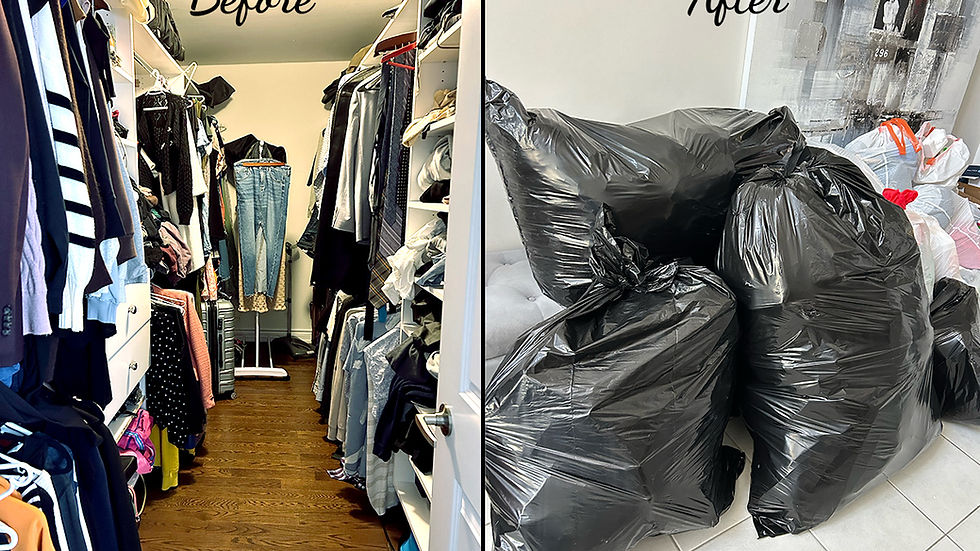
The Foundation: Edit Before You Organize
Here's the most important thing to know about closet organization: you can't organize your way out of having too much stuff.
The single biggest mistake people make is buying bins, hangers, and organizers before they've edited what they own. You end up with beautifully contained clutter, which defeats the purpose.
Start with the Edit
Pull everything out. Yes, everything. It's the only way to see what you actually have.
Sort into categories. Group similar items together: all pants, all sweaters, all workout gear.
Make decisions. For each item: Do you wear it? Does it fit? Does it make you feel good? If not, it's taking up space that could serve you better.
Be honest about "someday" items. If you haven't worn it in a year (and it's not formal or seasonal), you probably won't.
This part isn't always easy; clothes carry emotions and memories. Go at your own pace, but don't skip it.
How to Build Closet Organization Systems That Actually Last?
Zone Your Closet
Think of your closet in zones based on how you use it:
Prime real estate (eye level, easy reach): Everyday items you grab constantly.
Upper zones: Seasonal storage, occasion wear, items used less frequently.
Lower zones: Shoes, bags, items that work well on the floor or low shelves.
Drawers: Folded items, undergarments, accessories.
The goal is reducing friction. The things you use most should be the easiest to access.
Match Storage to Your Habits
Some people are hangers. Some are folders. Some need to see everything, and others prefer things tucked away. There's no universally "right" system, only what works for you and your lifestyle.
A Few Questions to Ask Yourself:
Do you put things away better when you can see them, or when they have a hidden home?
Are you more likely to maintain a system that's quick (even if less "perfect") or one that looks beautiful?
Do you share this space? What works for both of you?
Build for your real behavior, not an idealized version of yourself.
Add the Finishing Layer
Once the functional systems are in place, a little styling goes a long way. This isn't about making your closet Instagram-worthy (unless you want that); it's about creating a space that is actually useful and enjoyable to open.
Colour flow: Arranging clothes by colour creates order and makes getting dressed easier.
Uniform hangers: Matching hangers look better and often save space.
Intentional display: A few well-placed accessories or a small plant can make the space feel finished.
Good lighting: If your closet is dark, even a battery-powered light can transform the experience.
The best closet systems are ones you want to maintain because they feel good, not just because they're "supposed to" work. Remember, the goal is to create a space that feels natural and effortless to maintain.

DIY Closet Organization vs. Professional Help: How to Decide?
You can absolutely organize your closet yourself. Many people do, and with the right approach, it works beautifully. But there are situations where professional help makes sense:
DIY Might Be Right If:
You have time to dedicate to the project (expect a full day or longer for a primary closet).
You're comfortable making decisions about what to keep and let go.
You enjoy the process and find it satisfying.
Professional Help Might Be Right If:
You've tried organizing before, and it hasn't stuck.
You feel paralyzed by decisions or emotionally attached to items.
You're short on time but want lasting results.
You want the space to feel designed, not just functional.
You're going through a life transition (moving, downsizing, lifestyle change).
Your closet challenges are creating lasting systems and handling overwhelming volume.
There's no better approach. The goal is a closet that works for your life, however you get there.
What Professional Closet Organization Looks Like
If you're curious about what working with a professional organizer actually involves, here's a typical process:
Consultation: A conversation about your space, challenges, and what success looks like for you.
Decluttering: Working through your wardrobe together, with support for decision-making.
System design: Creating zones and storage solutions tailored to your specific wardrobe and habits.
Implementation: Installing systems, arranging items, and styling the space.
Maintenance guidance: Simple habits to keep things working long-term.
What are the Most Common Toronto Closet Challenges?
A few issues come up again and again in Toronto homes we work with:
Small Closets in Condos and Older Homes
Space is at a premium. The solution is usually vertical, using the full height of the closet, adding shelf risers, and being ruthless about what earns a spot.
Shared Closets
When two people share a space with different organizational styles, clear zones help. Each person gets their own areas, and you agree on shared spaces together.
Four-Season Wardrobes
Toronto weather means maintaining clothes for every extreme. Seasonal rotation systems with off-season items stored elsewhere will keep your daily closet manageable.
The "I Might Need It" Trap
This is universal but worth naming. If you're holding onto items "just in case," consider: how many times have you actually needed them? What's the real cost of the space they're taking?
How to Keep My Closet Organized?
Closet organization isn't a one-time event; it's an ongoing relationship with your space. A few habits that help:
One in, one out: When something new comes in, something goes out.
Seasonal check-ins: At each season change, do a quick edit.
Weekly reset: Five minutes to put things back where they belong.
Annual review: Once a year, do a deeper edit and adjust systems as your life changes.
Progress over perfection. A closet that's 80% organized and maintained beats one that's "perfect" for a week and then falls apart.
Ready to Transform Your Closet?
Your closet should make getting dressed easier, not harder. Whether you tackle it yourself or bring in help, the principles are the same: edit first, build systems around your real habits, and add enough style that you actually want to maintain it.
Start small if you need to. Even one organized drawer or shelf can shift how you feel about the whole space.
Feeling overwhelmed? Need help with your closet organization? Reach out today to schedule a free consultation with Efrat. You deserve a home that feels like a sanctuary, and I have your back every step of the way.
Happy organizing!


Comments